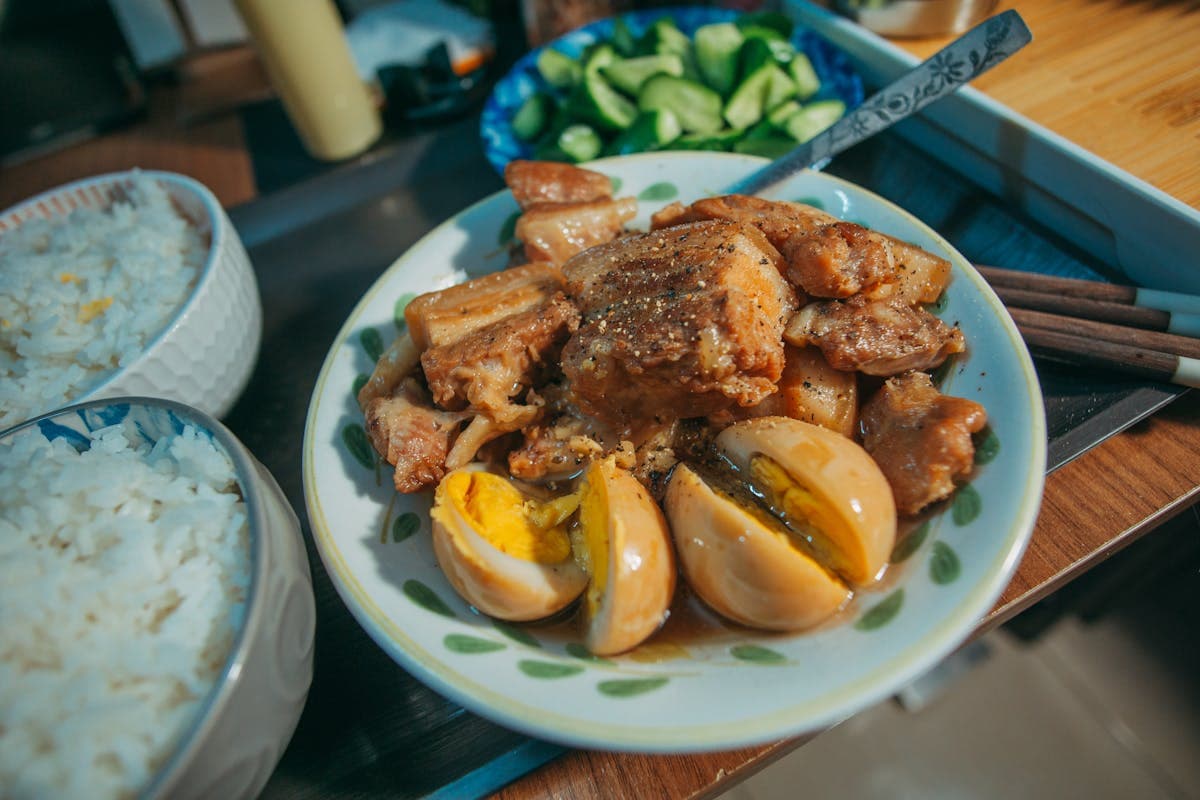
Filipino cuisine is a delicious blend of Malay, Chinese, Spanish, and American influences, creating a unique culinary identity that's bold, flavorful, and deeply tied to family and celebration. From savory stews to sweet desserts, here are the dishes you absolutely must try.

The Iconic Dishes
1. Adobo - The National Dish
Braised meat (usually chicken or pork) in vinegar, soy sauce, garlic, and black peppercorns. Every family has their own recipe.
Where to try: Literally everywhere - but Aristocrat Restaurant in Manila is iconic Pro tip: Try the dry version (adobong tuyo) for extra flavor

2. Sinigang - The Sour Soup
A tamarind-based sour soup with pork, shrimp, or fish and vegetables. The perfect comfort food, especially on rainy days.
Variations: Sinigang sa sampalok (tamarind), sa bayabas (guava), sa mangga (mango) Best paired with: Steaming hot rice

3. Lechon - The Celebration Star
Whole roasted pig with impossibly crispy skin. The centerpiece of every Filipino fiesta.
Where to try: Cebu is famous for lechon - try CnT Lechon or Zubuchon Fun fact: The crispy skin (balat) is the most prized part

4. Kare-Kare - The Peanut Stew
A rich oxtail stew in peanut sauce with vegetables, served with fermented shrimp paste (bagoong).
Where to try: Abe Restaurant, Manila Pro tip: The bagoong is essential - don't skip it!
5. Sisig - The Sizzling Sensation
Chopped pig face and ears seasoned with calamansi, chili, and onions, served on a sizzling plate with a raw egg on top.
Origin: Pampanga - the culinary capital of the Philippines Where to try: Aling Lucing's in Angeles City (the original!)

Street Food Stars


6. Isaw - Grilled Intestines
Chicken or pork intestines cleaned, marinated, and grilled to perfection.
Where to find: Street corners, especially near universities Dipping sauce: Spiced vinegar with chili
7. Balut - The Brave Choice
Fertilized duck egg with a partially developed embryo. A Filipino delicacy that's not for the faint-hearted.
How to eat: Crack, sip the broth, add salt, eat the yolk and embryo When: Usually sold at night by vendors calling "baluuuut!"
8. Kwek-Kwek - Orange Balls
Quail eggs coated in orange batter and deep-fried.
Dipping sauce: Sweet & sour or spiced vinegar Also try: Tokneneng (same thing but with chicken eggs)
Regional Specialties
9. Laing (Bicol)
Taro leaves simmered in coconut milk with chili peppers. Creamy, spicy, and utterly addictive.
Spice level: Can be very hot - Bicolanos love their chili!

10. Pinakbet (Ilocos)
Mixed vegetables stewed in fermented fish sauce. Healthy, flavorful, and distinctly Ilocano.
Key vegetables: Squash, bitter melon, eggplant, okra, string beans

11. Kinilaw (Visayas)
Filipino ceviche - raw fish "cooked" in vinegar and citrus with onions and ginger.
Best with: Fresh catch from local fishermen Where to try: Any coastal town in the Visayas

12. Bulalo (Batangas)
Beef shank and bone marrow soup that's rich, hearty, and perfect for cold mountain weather.
Where to try: Tagaytay - overlooking Taal Volcano The best part: Scooping out the marrow

Sweet Endings
13. Halo-Halo - The Summer Essential
Shaved ice with sweet beans, jellies, leche flan, ube ice cream, and evaporated milk. Mix it all up!
Where to try: Razon's or Chowking for classic versions Best time: Hot summer afternoons

14. Leche Flan
Filipino-style caramel custard - richer and denser than Spanish flan with a caramel top.
Texture: Dense, creamy, and eggy Perfect for: Dessert after any meal

15. Bibingka - Christmas Treat
Rice cake cooked in clay pots lined with banana leaves, topped with salted egg and cheese.
When: Best during Christmas season after Simbang Gabi (dawn mass) Where to try: Church courtyards during December

Food Trip Tips
Eating Like a Local
- Use your hands: For dishes like fried fish and chicken
- Say "kain tayo": An invitation to eat together
- Expect rice: Every meal includes rice - usually unlimited
- Share family-style: Dishes are meant to be shared
Where to Find the Best Food
- Palengke (wet markets): Freshest ingredients and local eats
- Carinderia: Small eateries with home-cooked food
- Jollibee: Yes, the fast food chain - it's a cultural experience
- Night markets: Street food galore
Food Safety Tips
- Start with cooked food if you have a sensitive stomach
- Drink bottled water
- Build up to street food gradually
- Look for busy stalls with high turnover
Final Thoughts
Filipino food is more than just sustenance—it's a window into the warmth, hospitality, and rich history of the Filipino people. Don't be afraid to try new things, ask locals for recommendations, and eat with your hands when appropriate. The best food experiences often happen at humble carinderia stalls and family gatherings, not fancy restaurants.
Hungry to explore the Philippines? Let Lakbay AI plan your food-focused itinerary!